Augmented Reality · 3 min read
How Augmented Reality is Revolutionizing the Beauty Industry
From virtual try-on to AI shade-matching, AR is redefining how beauty brands sell, engage customers, and reduce returns across Indonesia and globally.
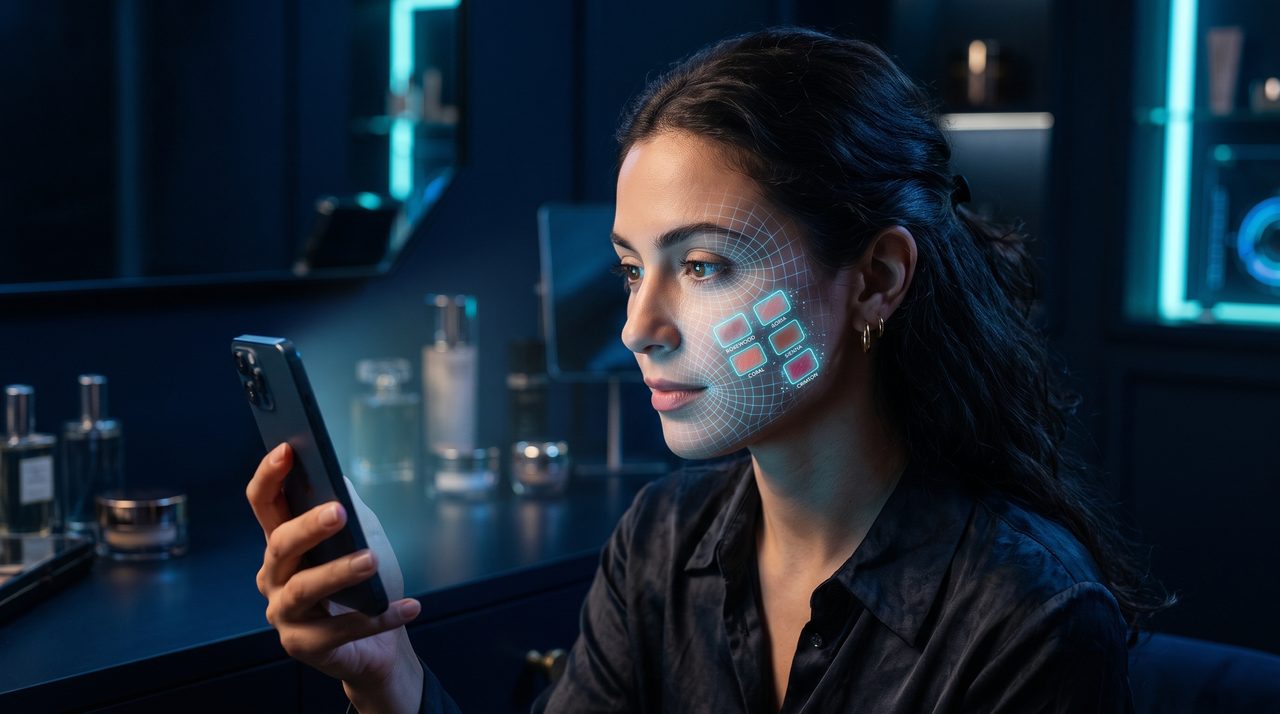
The global beauty industry spent decades solving for one problem: how do you get a customer to buy a product they cannot test? Physical testers in stores worked, but they were limited to those who visited — and after 2020, even that changed. The answer that has emerged, and is now reshaping the industry's economics, is augmented reality. Not AR as a novelty activation, but AR as the primary interface through which millions of consumers now discover, evaluate, and buy beauty products.
The Scale of the Shift
The numbers reflect a genuine structural change, not a trend. Major beauty retailers globally now report that products with AR try-on features outperform equivalent products without them — with conversion lifts of 2–3× and return rates 25–35% lower. In the Indonesian market, where beauty and personal care e-commerce has grown by more than 40% year-on-year, these numbers translate directly to competitive advantage for brands that have made the investment.
More significantly, AR is changing where the try-on moment happens. It used to happen at a store counter. Now it happens on a product page, in a TikTok video, on Instagram, via a WhatsApp link from a beauty advisor — anywhere a customer has their phone and an internet connection. The beauty counter has become distributed.
Core AR Technologies in Beauty Retail
Real-Time Lip and Eye Colour Try-On
The most mature and widely deployed application. Computer vision tracks the face, identifies lip boundaries or eye area, and renders selected colours with photorealistic texture — including the difference between glossy, matte, satin, and metallic finishes. The experience updates in real time as the customer moves, and multiple shades can be compared without any physical product.
Foundation and Concealer Shade Matching
AI analyses the customer's skin tone from their camera and recommends the closest match in the product range. This addresses the most common beauty return reason — "the shade looked different online" — at the root. For Indonesian customers with diverse skin tones spanning the range from fair to deep, accurate shade matching significantly increases confidence in online purchases.
Skincare Simulation
More experimental but increasingly viable: AR simulations that project the expected results of a skincare regimen onto the customer's face — showing reduced texture, improved evenness, or reduced dark circles after a defined period of consistent use. This addresses the core challenge in skincare marketing: results are invisible until weeks after purchase begins.
AR Packaging and Loyalty Mechanics
Scanning a product triggers an AR experience on the packaging itself — recipe tutorials, ingredient stories, loyalty reward triggers, or social challenges. This transforms the post-purchase relationship and creates ongoing engagement that extends well beyond the moment of sale.
What This Means for Indonesian Beauty Brands
For Indonesian beauty brands — from established names like Wardah and Pixy to emerging indie brands — AR represents both an opportunity and a growing expectation. Consumers who have tried AR try-on on international platforms now expect it domestically. Brands that provide this experience win consideration; brands that do not are increasingly invisible in digital shopping environments.
The distribution advantage is particularly significant in Indonesia. Beauty advisors can share a WebAR try-on link via WhatsApp directly to a customer — delivering a personalised product experience at scale without requiring a physical appointment. For a category where trust and personalisation drive sales, this is a structural shift in how relationships are built.
InReality Solutions builds AR beauty experiences — from single-product WebAR try-on to full virtual beauty counter integrations — for Indonesian brands. Explore our AR for e-commerce solutions or contact our team to discuss your brand's AR strategy.
Frequently Asked Questions
How is AR changing beauty retail and cosmetics?
AR has moved the try-on moment from the physical store to any device with a camera. Products with AR try-on convert 2–3× better and have 25–35% lower return rates than those without. Shade matching AI reduces the most common return reason (wrong colour). Beauty advisors can deliver personalised try-on experiences at scale via WhatsApp links.
What percentage of beauty brands are using AR?
Among major global beauty brands, AR adoption for e-commerce has become near-universal. Smaller and regional brands in Indonesia are in earlier stages of adoption, but the gap is closing quickly — particularly as WebAR eliminates the need for app development and makes AR accessible to brands of any size.
Does AR actually increase beauty product sales?
Yes, consistently. The conversion lift from AR try-on is documented across multiple studies and brand implementations: products with AR features convert 2–3× more than those without. Items-per-order also increase when customers can virtually try multiple shades or products simultaneously. Return rates fall, improving margins further.
How can Indonesian beauty brands implement AR try-on?
WebAR beauty try-on can be embedded in product listings, shared as links by beauty advisors via WhatsApp or social media, or deployed as Instagram/TikTok AR filters. InReality Solutions builds AR try-on experiences for Indonesian beauty brands — from 3D shade rendering to full virtual beauty counter platforms. Contact us to discuss your brand's requirements.

Content Specialist, InReality Solutions
Ready to Build Your New Reality?
Tell us about your brand and goals — we'll show you what's possible.