Augmented Reality · 4 min read
5 Examples of Augmented Reality Implementation in Real Estate Marketing
Concrete examples of how property developers and agencies across Indonesia and globally are using AR to sell faster and with better-qualified buyers.
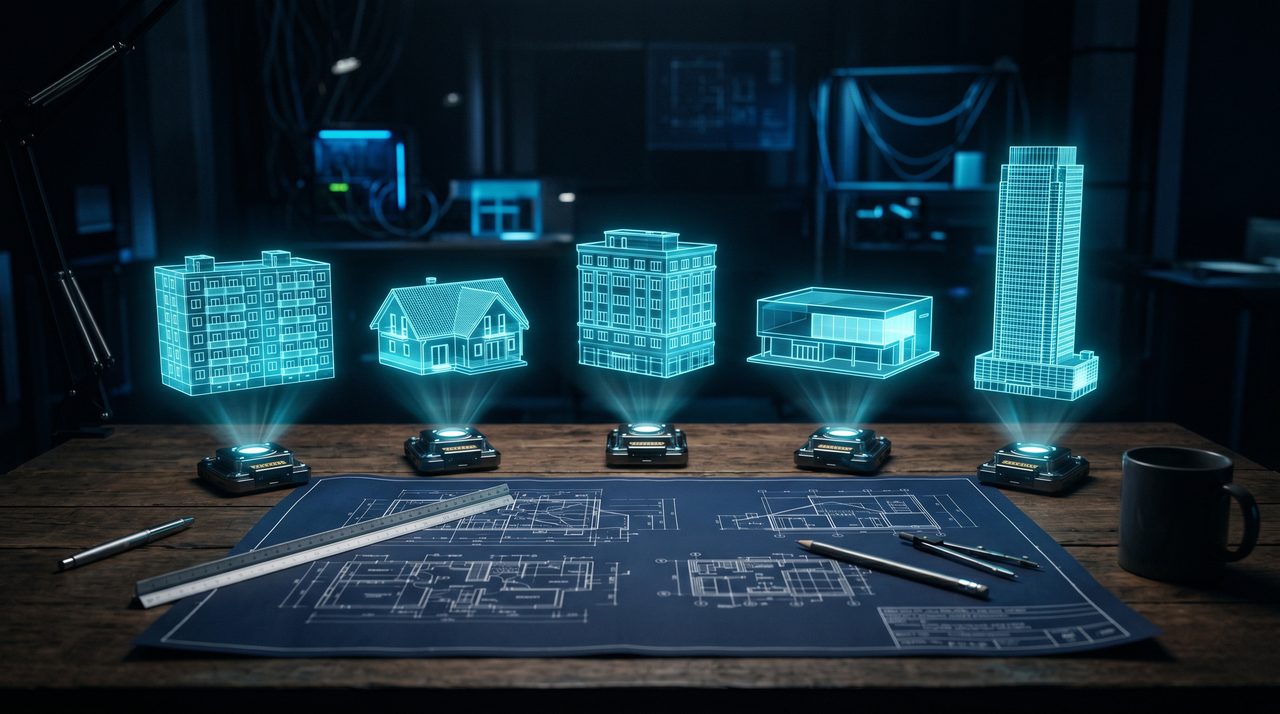
It is easy to talk about augmented reality's potential in property marketing in the abstract. It is more useful to look at how it actually works when deployed on real projects — what specific problems it solves, how buyers and agents interact with it, and what outcomes developers can realistically expect. Here are five concrete examples of AR implementation in real estate marketing that reflect real use cases in the Indonesian and global property market.
Example 1: Off-Plan Apartment Visualisation at the Sales Gallery
A Jakarta high-rise developer launches a new residential tower with 600 units across twelve floor levels. Physical show units exist for only two configurations. Using AR, buyers can scan a printed floorplan with their phone and see a furnished, finished version of any unit type rendered at accurate scale — including ceiling heights, window positions, and the view from that specific level.
At the sales gallery, agents use this tool to walk buyers through units that physically don't exist yet, switching between configurations and floor levels in seconds. The developer reports that qualified leads who engage with the AR experience convert to reservations at a higher rate than those who only see the show unit and printed materials — and the average time from first enquiry to reservation drops significantly.
Example 2: AR Interior Staging for Resale Properties
A real estate agency in Surabaya uses AR to virtually stage unfurnished or poorly presented resale properties. Instead of spending on physical staging or asking buyers to imagine furnished rooms, they create AR overlays showing a curated interior design scheme. Buyers scan the empty room with their phone and see it furnished — choosing between two or three style options that the agent has prepared.
This solves a specific problem: unfurnished properties consistently underperform furnished ones in online listing views and in-person showings, but professional physical staging costs millions of rupiah. AR staging costs a fraction of physical staging and can be updated without revisiting the property.
Example 3: Landed House Visualisation on an Empty Plot
A developer in Bandung selling landed houses in a new cluster development uses an AR marker embedded in the plot boundary markers. A prospective buyer standing on their chosen plot points their phone at the marker and sees the finished house rendered at real scale in that specific location — including landscaping, boundary walls, and neighbouring properties.
The experience directly addresses the most common hesitation in landed house purchases: "I can't visualise the finished house from an empty plot." Buyers who complete the AR experience on their chosen plot make reservation decisions faster than those who only review CGI images and architectural drawings.
Example 4: Remote Presentation for Overseas Buyers
A Bali villa developer targeting Singapore and Malaysian buyers creates a WebAR presentation that allows overseas prospects to experience the villa layout and outdoor spaces without visiting. The AR experience is shared as a link via WhatsApp, email, or embedded in the developer's website. Buyers in Singapore can place the villa's floor plan and living spaces in their own environment — their apartment, their garden — to get a sense of scale.
Combined with a 360° virtual tour of the show villa, this allows the sales team to take remote buyers from initial interest to qualified, motivated prospects without any travel being required — significantly reducing the sales cycle for international buyers.
Example 5: AR Brochure Activation for Luxury Apartment Launch
A luxury apartment developer in Jakarta creates a physical launch brochure where each page activates when scanned with a phone. The building's exterior animates to show its final appearance from multiple angles. Unit floorplans expand into 3D walk-throughs. The amenities floor — pool, gym, co-working space — becomes navigable. The AR layer transforms a premium print piece into a multimedia presentation that buyers experience at home, long after leaving the launch event.
The developer uses scan counts as a lead qualification signal: sales agents follow up with buyers whose brochures show multiple scans, knowing those individuals have spent significant time engaging with the development in detail.
What These Examples Have in Common
In every case, AR is solving for the same fundamental challenge: the gap between what a buyer can see and what they need to understand to make a confident decision. Whether that gap is because the property doesn't exist yet, the unit is unfurnished, the buyer is overseas, or the brochure is static — AR bridges it by adding the spatial, three-dimensional information that photographs and plans cannot convey.
InReality Solutions designs and builds AR marketing tools for property developers and agencies across Indonesia. See our dedicated AR solutions for sales & marketing page, explore our virtual tour services, or contact us for a project proposal.
Frequently Asked Questions
What are the most effective examples of AR in real estate marketing?
The five most effective real-world applications are: off-plan apartment visualisation at sales galleries, AR interior staging for unfurnished resale properties, on-plot visualisation for landed house developments, remote WebAR presentations for overseas buyers, and AR brochure activations that turn print into interactive media.
How does AR help sell off-plan property?
AR lets buyers see a finished, furnished version of an unbuilt unit at accurate scale — navigating through rooms, experiencing ceiling heights, and understanding spatial relationships — before construction begins. This directly addresses the core hesitation in off-plan buying ("I can't visualise it") and consistently reduces time-to-reservation.
What is AR virtual staging and how does it work?
AR virtual staging renders furniture and interior design into an empty or poorly presented property using the buyer's phone camera. Instead of physical staging (expensive, temporary, limited to one style) or CGI (static, not interactive), AR staging shows the property furnished from the buyer's own perspective, in real time, with the option to switch between styles.
How does AR improve property conversion rates?
AR improves conversion by resolving the uncertainty that causes buyer hesitation. Buyers who have experienced an AR visualisation of a property — whether off-plan or staged — arrive at physical viewings with reduced uncertainty and more specific questions, leading to faster and more confident purchasing decisions.

Founder & Managing Director · LinkedIn
Ready to Build Your New Reality?
Tell us about your brand and goals — we'll show you what's possible.