Augmented Reality · 6 min read
Glasses Translator: How AR Translator Glasses Are Changing Global Communication
AR translator glasses display real-time translations right in your field of vision. See how this technology benefits Indonesian businesses and how InReality Solutions can help.
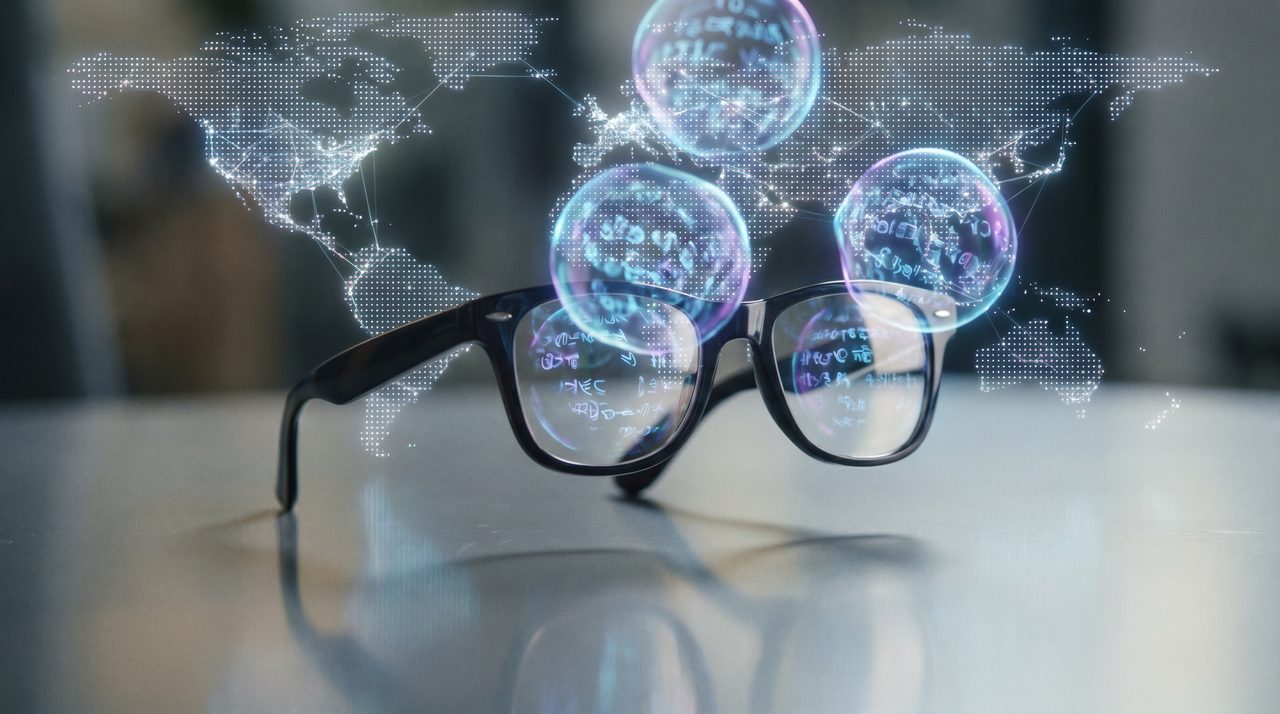
In April 2025, a single livestream moment sparked millions of conversations about the future of communication. Popular streamer Ishowspeed was touring China when viewers noticed something remarkable on his face: AR translator glasses that converted Mandarin signs and speech into English in real time, displayed directly on the lenses. The clip went viral instantly — not because it was a stunt, but because it showed that augmented reality has quietly crossed from science fiction into everyday utility. For Indonesian businesses operating in a multilingual, globally connected economy, this technology is more relevant than ever.
What Are AR Translator Glasses?
AR (Augmented Reality) translator glasses are wearable devices that combine three core technologies to eliminate language barriers on the spot:
- Artificial Intelligence for real-time, context-aware translation of text and speech
- Augmented Reality displays that project translated content directly into the user's field of vision — overlaid on the real world
- Built-in cameras and sensors that read foreign text, signage, menus, and spoken language in live environments
Unlike pulling out a phone to snap a photo for Google Translate, AR glasses work passively and continuously. Users simply look at the world, and translations appear. There is no friction, no extra step — just seamless comprehension across language barriers.
Current models support dozens of language pairs. Mandarin, Japanese, Korean, Arabic, and major European languages are already well-supported, with Bahasa Indonesia integration improving rapidly as demand grows across Southeast Asia.
Why the Ishowspeed Moment Went Viral — and What It Signals
When Ishowspeed wore his AR glasses during a China IRL stream, the moment resonated because it was unscripted and genuinely useful. He navigated menus, read street signs, and understood spoken conversations — all without stopping to use a translation app. Viewers watching from Indonesia, the US, Europe, and Asia all had the same reaction: this is real, and it works.
The viral moment was significant beyond entertainment. It demonstrated that AR technology has matured to the point where it integrates invisibly into daily life. That shift — from novelty to utility — is the milestone that matters most for business adoption. When consumers already understand and accept a technology through cultural moments like this, the window for early business adoption opens wide.
Indonesia is particularly well-positioned to benefit. As the world's fourth most populous nation, a major destination for foreign investment, and an archipelago where even domestic travel involves navigating regional languages and dialects, real-time translation technology addresses a genuine pain point at scale.
Real-World Business Benefits of AR Translation Technology
AR translator glasses are not just a travel convenience — they represent a meaningful shift in how businesses can serve international customers and partners. Here is how the technology creates measurable value:
1. Seamless Communication with International Clients
Indonesian exporters, tourism operators, and B2B companies regularly interact with buyers and partners from China, Japan, South Korea, the Middle East, and Europe. Language gaps slow negotiations, create misunderstandings, and sometimes cost deals. AR glasses allow sales staff, account managers, and executives to communicate naturally with foreign counterparts without the delay and awkwardness of waiting for a human interpreter.
2. Enhanced Retail and E-Commerce Customer Experience
Foreign tourists and expats shopping in Indonesia — in Bali's boutiques, Jakarta's malls, or at trade exhibitions — frequently struggle to read product labels, pricing details, or promotional terms. AR-enabled retail environments, where either staff or customers can use smart glasses, make the shopping experience more intuitive and inclusive. This directly reduces cart abandonment and increases average transaction value for international shoppers.
3. Smarter Trade Shows and B2B Exhibitions
Indonesia hosts major international trade events — from the Indonesia International Motor Show to Food & Hotel Indonesia. Exhibitors who equip booth staff with AR translator glasses give every foreign visitor a native-language experience. Product details, specifications, and marketing materials become accessible in real time without printed multilingual brochures or on-site translators. This creates a more memorable and professionally differentiated booth presence.
4. Hospitality and Tourism Operations
Bali alone receives millions of international visitors annually. Hotel front desk staff, tour guides, restaurant servers, and transport operators frequently encounter language barriers that affect service quality and guest satisfaction scores. AR translation glasses in hospitality settings reduce communication errors and improve the guest experience measurably — a direct impact on review ratings and repeat bookings.
5. Training, Education, and Multilingual Presentations
Corporations running multinational training programs can use AR glasses to deliver content simultaneously across languages without separate interpreter channels. Presenters speak in one language while attendees in different language groups each see real-time translated text in their own lenses. This is particularly relevant for Indonesian companies scaling regionally across ASEAN markets with diverse language needs.
How AR Translator Glasses Fit Into the Broader AR Ecosystem
The technology powering these glasses — computer vision, edge AI processing, and lightweight AR display optics — is the same foundation underlying a wide range of enterprise AR applications already transforming business in Indonesia. Translation is one use case among many:
- Virtual product try-on (glasses, clothing, cosmetics, furniture) for e-commerce platforms
- AR product visualization that lets buyers see items at actual scale in their own space before purchasing
- Interactive 3D product demonstrations for sales presentations
- Immersive virtual tours for real estate, hospitality, and tourism marketing
- AR-enhanced training simulations for manufacturing, medical, and technical fields
What Ishowspeed's glasses demonstrated is that the underlying AR hardware and AI infrastructure has reached a level of maturity where real-world deployment is practical — not a pilot project, but a genuine operational tool. Businesses that begin exploring AR integration now build a capability advantage before competitors catch up.
The Indonesian Market Opportunity for AR Technology
Indonesia's digital economy is projected to reach $130 billion by 2025, according to the Google-Temasek-Bain e-Conomy SEA report. Mobile penetration is among the highest in the world, consumers are fast adopters of new digital experiences, and the government's Making Indonesia 4.0 initiative explicitly prioritizes advanced technology adoption across key industries including manufacturing, retail, and tourism.
For AR specifically, the confluence of a large, young, digitally engaged population with significant inbound tourism and international trade activity creates strong demand. Businesses that position AR as part of their customer experience — whether through smart glasses for staff, AR product try-on for e-commerce, or immersive virtual tours for marketing — are tapping into consumer expectations that are already shifting in this direction.
InReality Solutions has been developing and deploying AR experiences for Indonesian businesses since the technology was still being dismissed as a gimmick. The viral moment with Ishowspeed's glasses is a reminder that what seemed futuristic just a few years ago is now a competitive necessity.
Getting Started with AR for Your Business
If the Ishowspeed moment got you thinking about what AR could do for your business, the next step is a practical assessment of where augmented reality creates the most value in your specific context. Not every business needs smart glasses — but most businesses in retail, tourism, manufacturing, real estate, and B2B sales have at least one customer touchpoint where AR can reduce friction, increase engagement, or improve conversion.
InReality Solutions works with Indonesian companies to design, build, and deploy AR solutions that match their operational reality and budget. Whether that is an AR product catalog for an e-commerce brand, an interactive showroom for a property developer, or a virtual tour for a resort in Bali, the approach starts with understanding your specific business challenge — not selling a technology for its own sake.
Ready to explore how augmented reality can give your business a real competitive edge? Contact InReality Solutions for a free consultation, or learn more about our AR for e-commerce and AR for sales and marketing services. The technology is here — the question is whether your business will use it first.
Frequently Asked Questions
How do AR translator glasses work in real-world environments?
AR translator glasses use built-in cameras to capture text and audio from the surrounding environment, then process this input through on-device or cloud-based AI to generate translations in milliseconds. The translated content is projected directly onto transparent lenses so the user sees both the real world and the translation simultaneously. Current consumer and enterprise models support dozens of language pairs, with recognition accuracy improving steadily as the underlying AI models are trained on more real-world data.
Can Indonesian businesses realistically use AR glasses technology right now?
Yes — commercially available AR translator glasses from brands including XREAL, Rokid, and others are already shipping and in use across Asia. Enterprise deployments for hospitality, trade exhibitions, and retail environments are active in markets including Japan, China, and Singapore, with adoption accelerating in Southeast Asia. Indonesian businesses in tourism, export trade, and international retail are the most immediate candidates, as they deal with foreign-language interactions daily and have clear ROI from removing that friction.
What does it cost to implement AR technology for a business in Indonesia?
Costs vary significantly depending on the application. Consumer AR glasses for staff use range from $300–$800 USD per unit, while enterprise-grade wearables with custom software integration start higher. Custom AR experiences — such as AR product catalogs, virtual try-on, or interactive showroom applications — are typically project-based and priced according to scope, number of products, and platform requirements. InReality Solutions offers consultations to scope projects accurately before any commitment, ensuring businesses understand the investment and expected return before proceeding.
How long does it take to develop and deploy an AR solution for my business?
Simple AR experiences — such as a WebAR product viewer or a branded AR filter — can be designed and deployed in four to eight weeks. More complex solutions involving custom 3D modeling, enterprise system integration, or multi-platform deployment typically take three to six months from briefing to launch. InReality Solutions uses an iterative development approach, so clients see working prototypes early in the process and can provide feedback before final production, which reduces rework and keeps timelines on track.
Why should an Indonesian company choose InReality Solutions for AR development?
InReality Solutions is a Jakarta-based AR and VR studio with direct experience in the Indonesian market — including local consumer behavior, regional platform preferences, and the practical realities of deploying technology across Indonesia's diverse geography. Unlike offshore agencies, the team understands Bahasa Indonesia content requirements, local regulatory context, and the specific industries driving AR adoption in Indonesia, from Bali tourism to Jakarta's corporate sector. The company offers end-to-end services from concept and 3D production through to deployment and ongoing optimization.

Content Specialist, InReality Solutions
Ready to Build Your New Reality?
Tell us about your brand and goals — we'll show you what's possible.