Virtual Reality · 4 min read
Advantages and Disadvantages of Virtual Reality in Business
A balanced guide to VR for Indonesian businesses: what it genuinely delivers, where it falls short, and how to decide if it is right for your organisation.
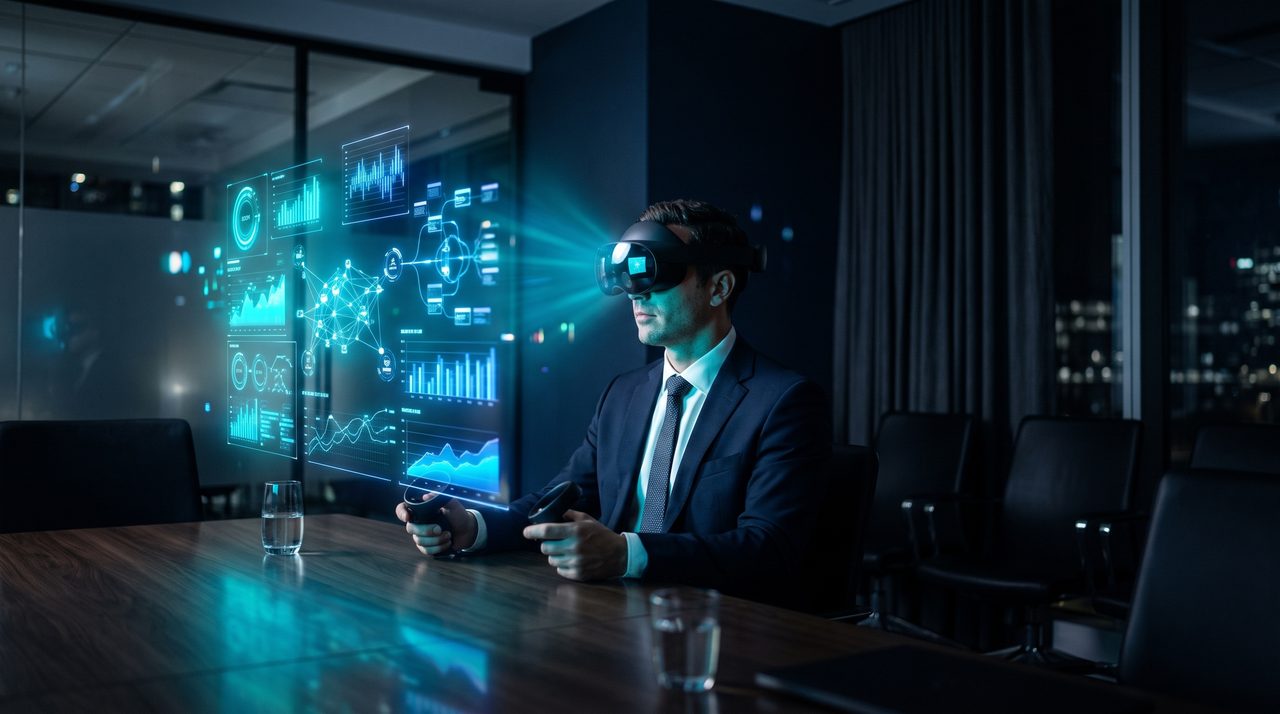
Virtual reality has graduated from consumer gaming hardware to a serious enterprise tool in Indonesia over the past four years. Manufacturing companies use it to train workers without shutting down production lines. Property developers use it to sell buildings that haven't been constructed. Hospitality brands use it to give potential guests an experience before they book. But VR is not right for every organisation or every application, and a clear-eyed assessment of its advantages and limitations will save both time and budget.
The Advantages of Virtual Reality in Business
Immersive Experience That No Other Medium Delivers
VR's defining advantage is presence — the psychological sense of actually being somewhere. When a trainee steps into a VR emergency simulation, their brain responds to the scenario as it would to a real one: elevated heart rate, heightened attention, genuine stress-tested decision-making. No video, no classroom session, and no two-dimensional simulation produces this effect. For training applications where real-world practice would be dangerous, expensive, or impossible, this is not a nice-to-have — it is the point.
Safe Simulation of High-Risk Scenarios
Industrial safety training, surgical procedures, emergency evacuation, construction site protocols — these are scenarios where mistakes in training have real consequences. VR allows organisations to simulate exactly these scenarios at full realism without any of the physical risk. An employee can experience and respond to a factory chemical spill, a building fire, or a machinery failure, and learn from the experience in a way that prepares them for the real event without endangering anyone.
Consistent, Scalable Training Delivery
A physical training session is as good as the trainer who delivers it, the equipment available, and the attention of the cohort on that particular day. A VR training module delivers the same experience, at the same quality, to every trainee who puts on the headset — regardless of location, time, trainer availability, or cohort size. For Indonesian organisations with multiple sites across the archipelago, this consistency is a significant operational advantage.
Spatial Understanding for Architecture, Property, and Design
VR allows a client to walk through a building before it is built — understanding ceiling heights, room proportions, and the flow between spaces in a way that architectural drawings and CGI renders cannot match. For property developers, this is a sales tool. For architects and interior designers, it is a client communication and approval tool that reduces revisions and misunderstandings.
Data and Performance Tracking
VR training platforms track every decision a trainee makes — where they looked, how long they hesitated, what they did in response to a hazard. This data is impossible to gather from classroom or on-the-job training. Organisations can use it to identify training gaps, track improvement, and ensure consistent competency standards across their workforce.
The Disadvantages of Virtual Reality in Business
Hardware Cost and Complexity
Standalone VR headsets (Meta Quest, Pico) have become significantly more affordable, but they still represent an investment — and they require management, charging, hygiene protocols, and eventual replacement. For a small team running occasional training sessions, the economics are different from a large enterprise using VR daily across multiple sites.
Motion Sickness for Some Users
A percentage of users experience nausea or discomfort in VR, particularly in experiences with locomotion (virtual movement without physical movement). Modern VR applications have reduced this significantly through better frame rates and movement design, but it has not been eliminated entirely. Organisations deploying VR training need to account for the possibility that some employees may not be able to use it comfortably.
Content Development Time and Cost
A high-quality VR training or presentation experience requires significant development investment — 3D environment modelling, interaction scripting, audio production, and testing. The cost is typically justified by scale (many trainees, many uses) but represents a barrier for small organisations or one-off applications.
Network and Infrastructure Constraints
While standalone headsets have reduced the need for powerful PC hardware, distributing VR content across multiple sites in Indonesia — particularly in areas with limited connectivity — still requires planning. Ensuring consistent software versions, content updates, and technical support across a distributed deployment is an ongoing operational consideration.
The Verdict
VR makes strong economic sense for organisations that need: consistent, scalable training delivery across multiple locations; safe simulation of high-risk or high-cost scenarios; or immersive spatial experiences for property, architecture, or design applications. It is less suited to one-time applications, very small audiences, or contexts where user comfort with technology cannot be assumed.
InReality Solutions designs and deploys VR solutions for training, property, and enterprise applications across Indonesia. Learn about our virtual reality services or contact us to discuss whether VR is the right tool for your specific challenge.
Frequently Asked Questions
What are the main advantages of virtual reality for business?
The five key advantages are: immersive presence that no other medium delivers, safe simulation of high-risk scenarios, consistent and scalable training delivery across locations, spatial understanding for architecture and property, and performance data tracking on every trainee interaction.
What are the limitations of VR technology for businesses?
The main limitations are: upfront hardware investment (though costs have fallen significantly), motion sickness in some users (typically 5–15% of the population), content development cost that requires scale to justify, and infrastructure considerations for distributed deployments in areas with limited connectivity.
Is VR worth investing in for Indonesian businesses?
VR delivers strong ROI for organisations with distributed workforces that need consistent training, high-risk operational environments where simulation is safer than practice, or property and architectural applications where spatial visualisation is central to the sale. For small organisations running one-off applications, the economics are harder to justify.
What industries use VR the most in Indonesia?
Manufacturing and industrial safety training, property development and architecture, hospitality (pre-booking experience), healthcare training, corporate safety compliance, and government emergency preparedness are the primary VR application areas in the Indonesian market.

Founder & Managing Director · LinkedIn
Ready to Build Your New Reality?
Tell us about your brand and goals — we'll show you what's possible.