- Home
- Case Studies
- Cellini
Case Study · 13 min read
How Cellini Generated 30% of Online Sales Through an Immersive Virtual Furniture Store
See how InReality Solutions created an immersive virtual furniture store for Cellini that contributed to 30% of online sales and increased basket size by 45%.
Project Overview
| Client | Cellini |
| Industry | Furniture & Retail |
| Location | Alam Sutera, Indonesia |
| Solution | Interactive Virtual Furniture Store |
| Project Completed | 2022 |
| Showroom Size | Approximately 500 m² |
| Interactive Products | Approximately 150 Selected Products |
| Technology | Matterport |
| On-Location Scanning | 2 Days |
| Development Period | Approximately 1 Month |
| Scope | Scanning, Virtual Store Development, Product Tagging, Integration, Testing & Deployment |
| E-Commerce Integration | Individual Product Links |
| Primary Channels | Website & Social Media |
| Devices | Desktop, Mobile, Tablet & Compatible VR Devices |
| Primary Objective | Connect Physical Showroom Discovery with E-Commerce |
| Key Result | Approximately 30% of Online Sales During the Measured COVID Period |
| Basket Size Result | Approximately 45% Higher for Virtual Store Customers |
On This Page (27)
- The Challenge: Furniture Loses Context When It Moves Online
- The Limitation of Conventional Furniture E-Commerce
- The Opportunity: Transforming a 500 m² Showroom into a Virtual Store
- Why Furniture Was Particularly Suited to a Virtual Store
- Digitally Capturing the Complete Cellini Showroom
- Managing Mirrors and Reflective Surfaces
- Creating an Immersive 3D Showroom Experience
- Making Approximately 150 Products Interactive
- From Virtual Showroom to E-Commerce
- Bringing Visual Merchandising Online
- Encouraging Contextual Product Discovery
- Supporting Cross-Selling and Complementary Purchases
- 45% Higher Average Basket Size
- Approximately 30% of Online Sales During the COVID Period
- Supporting Omnichannel Retail During COVID-19
- More Than a Response to the Pandemic
- Building Trust Through Physical Retail Presence
- Using the Matterport Dollhouse View for Navigation
- Website and Social Media Integration
- VR Compatibility
- A Collaborative Product Tagging Process
- Empowering the Internal Team
- The Challenge of Updating Physical Virtual Stores
- Completing the Project in Approximately One Month
- The Results
- Why the Cellini Virtual Store Worked
- From Physical Showroom to Digital Sales Channel
The Challenge: Furniture Loses Context When It Moves Online
Furniture is different from many other e-commerce product categories.
Customers are not simply purchasing an individual object.
They are imagining how that object will exist within a space.
How will the sofa look with a coffee table?
Which rug complements the furniture?
Would a particular side table work with the living room arrangement?
Which lamp completes the space?
How do the different colors, materials, and furniture styles work together?
Physical furniture showrooms are specifically designed to answer these questions.
Retailers invest significant resources into:
- Interior design
- Product placement
- Visual merchandising
- Lighting
- Color coordination
- Furniture combinations
- Room arrangements
- Customer movement through the showroom
All of these elements help customers visualize products inside their own homes.
Conventional e-commerce cannot easily recreate this experience.
The Limitation of Conventional Furniture E-Commerce
A traditional online furniture store typically presents customers with product listings.
A customer sees a sofa.
Clicks the product.
Reads the specifications.
Looks through photographs.
Returns to the product listings.
Searches for a coffee table.
Opens another product page.
Searches for a rug.
The customer is responsible for mentally combining all these separate products into a complete interior.
The physical showroom experience works differently.
Customers see products together.
They discover complementary items naturally.
They understand scale.
They experience different combinations.
They may enter the showroom looking for one product and leave having discovered several others that complete the space.
InReality Solutions identified an opportunity to bring more of this experience online.
The Opportunity: Transforming a 500 m² Showroom into a Virtual Store
InReality Solutions approached Cellini with the concept of creating an interactive digital version of its approximately 500 m² Alam Sutera showroom.
The objective was straightforward:
Allow customers to experience the real Cellini showroom from anywhere.
Instead of browsing individual products through conventional e-commerce pages, customers could virtually enter the showroom.
They could:
- Walk through the real retail environment
- Explore different furniture settings
- See products displayed together
- Understand how different pieces complemented each other
- Discover products naturally
- Select individual furniture items
- Access product information
- Continue directly to the corresponding e-commerce product page
The virtual store was designed to bridge physical retail and digital commerce.
Why Furniture Was Particularly Suited to a Virtual Store
Not every retail category is equally suited to immersive commerce.
Furniture presented several significant advantages.
First, furniture is highly visual.
Customers benefit from seeing products within a complete interior environment.
Second, furniture is often purchased in combinations.
A customer purchasing a sofa may also require:
- A coffee table
- Side tables
- A rug
- Lighting
- Chairs
- Accessories
Third, furniture generally has a longer product lifecycle than fast-moving retail categories.
Unlike fashion stores or other retailers where SKUs and displays may change rapidly, furniture collections can remain relevant for longer periods.
This makes the initial investment in creating a virtual showroom more commercially sustainable.
Finally, trust plays an important role in furniture purchasing.
Furniture can represent a significant financial investment.
Allowing customers to virtually visit a large physical showroom helps demonstrate the scale, legitimacy, product range, and physical presence of the retailer.
Digitally Capturing the Complete Cellini Showroom
InReality Solutions used Matterport technology to digitally capture the approximately 500 m² Cellini showroom in Alam Sutera.
The scanning process was conducted over two days.
To ensure the best possible result, the scanning was completed during non-operational hours.
This allowed the InReality Solutions team to work without:
- Customers moving through the showroom
- Employees interrupting the scanning process
- Products being moved
- Changes occurring between scans
- Unnecessary visual distractions
The controlled environment helped the team efficiently capture the complete showroom.
Managing Mirrors and Reflective Surfaces
Furniture showrooms can present particular technical challenges during 3D scanning.
Mirrors and reflective surfaces can interfere with spatial capture and visual consistency.
However, through previous experience working with immersive photography and scanning technology, the InReality Solutions team was able to manage these challenges and successfully capture the showroom.
The result was a complete digital representation of the physical Cellini retail environment.
Creating an Immersive 3D Showroom Experience
The completed Matterport experience allowed customers to virtually move through the Cellini showroom.
Instead of simply viewing individual furniture photographs, users could explore the space naturally.
They could move between different showroom environments.
They could see products within professionally designed room arrangements.
They could understand how different furniture items worked together.
They could also use the Matterport Dollhouse View to understand the complete showroom layout and navigate between different areas of the store.
This created a more exploratory digital shopping experience.
Making Approximately 150 Products Interactive
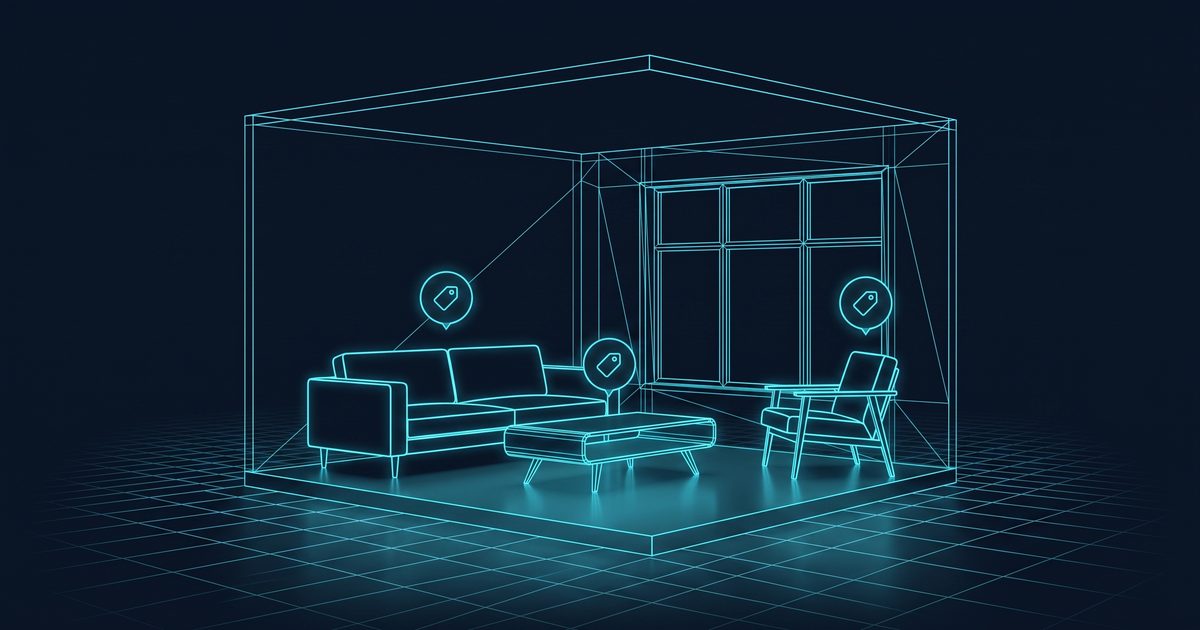
Approximately 150 selected products throughout the showroom were made interactive.
Mattertags were strategically placed on individual furniture items.
When customers selected a product, they could immediately access information including:
- Product name
- Price
- Product description
- Additional product information
- A link to view the complete product page
This allowed the virtual store to connect physical product discovery with Cellini’s existing e-commerce infrastructure.
From Virtual Showroom to E-Commerce
The customer journey was designed to be simple.
Enter the Virtual Showroom → Explore Furniture Settings → Discover Products → Select an Item → View Product Information → Continue to the E-Commerce Store → Purchase Online
When customers selected a tagged product, they could view basic information directly within the Matterport experience.
If they wanted additional information or wished to purchase the product, they could continue to the corresponding product page on Cellini’s e-commerce website.
The product page opened in a separate browser tab.
This approach allowed Cellini to maintain its existing e-commerce infrastructure while using the virtual store as an additional product discovery and customer acquisition channel.
Bringing Visual Merchandising Online
One of the most valuable aspects of the project was the ability to bring Cellini’s physical visual merchandising strategy into the digital environment.
Furniture retailers invest heavily in showroom design.
Products are not placed randomly.
A sofa may be positioned beside a particular coffee table.
A rug may be selected to complement the furniture.
Lighting may be chosen to complete the room.
Accessories may help customers understand how the overall space could look.
The virtual store allowed customers to experience these professionally designed combinations online.
This changed the shopping experience.
Instead of asking:
“Do I want to buy this sofa?”
The customer could begin asking:
“How can I create this complete look inside my home?”
That difference became commercially significant.
Encouraging Contextual Product Discovery
Conventional e-commerce is often driven by intent.
A customer searches for a product they already know they need.
A virtual showroom introduces discovery.
Customers can encounter products they were not originally searching for.
Someone exploring a sofa may notice:
- A matching coffee table
- A complementary rug
- A side table
- A lamp
- An additional chair
These products become part of the customer's consideration because they are presented naturally within the environment.
This helped recreate an important element of physical retail:
Customers discovering additional products while shopping.
Supporting Cross-Selling and Complementary Purchases
The virtual showroom allowed customers to better understand which products worked together.
Instead of purchasing furniture items independently, users could see complete combinations.
This supported opportunities for:
- Cross-selling
- Complementary product discovery
- Larger purchases
- Increased basket size
According to the project results, customers who purchased after using the virtual store had an average basket size approximately 45% higher than customers who shopped through the conventional e-commerce experience alone.
This was one of the most important commercial outcomes of the project.
45% Higher Average Basket Size
The Cellini virtual store demonstrated a measurable difference in customer purchasing behavior.
Customers who entered the purchasing journey through the virtual store generated an average basket size approximately 45% higher than conventional online shoppers during the measured COVID period.
The virtual showroom helped customers:
- Discover additional products
- See complementary furniture combinations
- Visualize complete room arrangements
- Explore products more naturally
- Move beyond single-product purchasing
Customers commonly purchased multiple complementary items after exploring the showroom environment.
The result provides a strong example of how immersive commerce can influence not only customer engagement, but actual transaction value.
Approximately 30% of Online Sales During the COVID Period
The second major commercial result was the virtual store's contribution to Cellini's online sales.
During the measured COVID period:
Approximately 30% of Cellini's online sales were attributed to customers coming through the virtual store experience.
This demonstrated that the virtual showroom was not simply a marketing novelty.
It became a meaningful part of the company's digital sales ecosystem.
Customers used the experience to:
- Explore the showroom
- Discover products
- Research furniture
- Identify complementary items
- Continue to the e-commerce website
- Complete purchases
The virtual store provided an additional path between customer discovery and online conversion.
Supporting Omnichannel Retail During COVID-19
The project was completed in 2022, within the broader context of the COVID-19 pandemic.
Physical retail had been significantly disrupted.
Customer behavior had changed.
Consumers had become increasingly comfortable shopping online.
However, furniture remained a category where the physical showroom experience continued to provide significant value.
The Cellini virtual store helped bridge these two realities.
Customers could experience the physical showroom digitally.
They could explore real products in real retail environments.
They could discover furniture combinations.
And they could continue directly to the online store when they were ready to purchase.
More Than a Response to the Pandemic
Although COVID-19 formed part of the business context behind the project, the virtual store was not designed solely as a temporary pandemic solution.
The concept also addressed a broader omnichannel retail opportunity.
The physical showroom represented a significant business asset.
Cellini had invested in:
- Retail space
- Interior design
- Visual merchandising
- Product displays
- Customer experience
The virtual store allowed more customers to access that investment.
The showroom was no longer limited only to people who could physically visit Alam Sutera.
It could be explored online from anywhere.
Building Trust Through Physical Retail Presence
Trust is particularly important when customers purchase higher-value products online.
A conventional e-commerce website may not always communicate the complete scale of the business behind it.
Customers may question:
- Is this an established retailer?
- Does the company have a physical presence?
- How extensive is the product selection?
- Can I trust the quality of the business?
- Is this a legitimate furniture brand?
The virtual store provided immediate visual evidence.
Customers could enter a real approximately 500 m² showroom.
They could explore the space.
They could see the range of products.
They could experience the scale of the retailer.
This helped strengthen customer confidence in the brand and its physical retail presence.
Using the Matterport Dollhouse View for Navigation
The Matterport platform provided customers with an interactive Dollhouse View of the complete showroom.
This allowed users to see the overall spatial layout of the store.
Customers could:
- Rotate the digital showroom
- Understand the overall space
- Identify different areas
- Select locations
- Move directly between sections
This provided an intuitive method of navigating the approximately 500 m² retail environment.
Website and Social Media Integration
The Cellini virtual store was primarily distributed through:
- Cellini’s website
- Social media channels
During the COVID period, the experience was actively promoted through Cellini’s social platforms.
Customers could access the virtual store online, explore the physical showroom, discover products, and continue to the conventional e-commerce website.
This helped integrate the immersive experience into Cellini’s broader digital marketing and sales strategy.
VR Compatibility
The Cellini virtual store was also compatible with supported VR devices.
This provided users with an additional way to experience the physical showroom in a more immersive environment.
A Collaborative Product Tagging Process
InReality Solutions handled the overall virtual store project, including:
- Project planning
- Matterport scanning
- Spatial capture
- Virtual store development
- Initial product tagging
- E-commerce linking
- Testing
- Deployment
Approximately 150 selected products needed to be identified and connected to the appropriate information and e-commerce pages.
Because the Cellini team had greater familiarity with its complete product catalog, InReality Solutions also trained the internal team to manage product tagging.
This created a more efficient workflow.
InReality Solutions established the experience and tagging system, completed part of the product integration, and provided the Cellini team with the knowledge required to continue managing tags internally.
Empowering the Internal Team
Training the Cellini team provided an additional advantage.
Discontinued products could be removed from the Matterport experience without requiring InReality Solutions to manage every individual change.
This gave the internal team greater control over ongoing product information.
However, significant changes to the physical showroom or the addition of completely new display environments would still require rescanning.
The Challenge of Updating Physical Virtual Stores
Any virtual store based on a real physical environment has an inherent limitation.
Physical spaces change.
Products move.
New collections arrive.
Old products are discontinued.
Displays are redesigned.
To accurately reflect major physical changes, areas of the store may need to be scanned again.
However, furniture has an advantage compared to many other retail categories.
Furniture product cycles are generally slower than fast-moving categories such as fashion.
Products and displays can remain relevant for longer periods.
This made the Cellini showroom particularly well suited to the virtual store concept.
Completing the Project in Approximately One Month
The complete Cellini virtual store project took approximately one month.
The on-location scanning itself was completed over two days.
The remaining project period focused primarily on:
- Processing the Matterport experience
- Organizing the virtual store
- Product tagging
- Product information
- E-commerce linking
- Testing
- Deployment
- Internal team training
The result was an interactive digital version of the approximately 500 m² Cellini showroom.
The Results
The Cellini virtual store delivered measurable commercial results during the measured COVID period.
The experience:
- Digitally transformed an approximately 500 m² furniture showroom
- Made approximately 150 selected products interactive
- Connected physical product discovery with Cellini’s e-commerce website
- Allowed customers to experience professionally designed furniture combinations online
- Supported complementary product discovery
- Helped strengthen trust in Cellini’s physical retail presence
- Contributed to approximately 30% of online sales during the measured COVID period
- Generated an average basket size approximately 45% higher than conventional online purchases
These results demonstrate the potential impact of immersive commerce when the technology is aligned with the characteristics of the product category.
Why the Cellini Virtual Store Worked
The success of the Cellini virtual store was not simply because customers could walk around a showroom online.
The experience worked because it addressed several specific limitations of conventional furniture e-commerce.
Furniture needs context.
The virtual store showed products together.
Customers need inspiration.
The virtual store allowed them to explore complete furniture arrangements.
Furniture purchasing requires trust.
The virtual store demonstrated Cellini’s physical presence, scale, and product range.
Customers do not always know every product they need.
The virtual store encouraged natural discovery.
Complementary products increase transaction value.
The virtual store allowed customers to see which furniture items worked together.
The technology worked because it was aligned with the business problem.
From Physical Showroom to Digital Sales Channel
The project began with:
- A 500 m² physical furniture showroom
- Professionally designed retail environments
- Hundreds of furniture products
- An existing e-commerce platform
- Changing customer behavior
- The broader disruption of COVID-19
- An opportunity to strengthen omnichannel retail
InReality Solutions transformed these elements into:
- An immersive virtual furniture store
- A complete Matterport digital twin
- Approximately 150 interactive products
- Product information through Mattertags
- Direct connections to e-commerce product pages
- 3D Dollhouse navigation
- Website integration
- Social media distribution
- VR compatibility
- Internal product management capabilities
The commercial results were significant.
Approximately 30% of online sales during the measured COVID period were attributed to the virtual store.
And:
Customers who purchased after exploring the virtual showroom generated an average basket size approximately 45% higher than conventional online shoppers.
The Cellini project demonstrated that immersive commerce can do more than create an engaging customer experience.
When implemented strategically, it can influence how customers discover products, what they purchase, and how much they spend.
Frequently Asked Questions
What did InReality Solutions create for Cellini?
InReality Solutions created an interactive virtual furniture store based on Cellini’s approximately 500 m² showroom in Alam Sutera. The experience allowed customers to virtually explore the real showroom, discover furniture in professionally designed settings, interact with selected products, access product information, and continue directly to Cellini’s e-commerce website.
When was the Cellini virtual store created?
The project was completed in 2022.
Why did Cellini create a virtual store?
The project was developed within the broader context of COVID-19 and the increasing importance of omnichannel retail. The objective was to bring more of the physical furniture showroom experience online and connect immersive product discovery with Cellini’s existing e-commerce platform.
What technology was used?
The virtual store was created using Matterport technology.
How large was the Cellini showroom?
The showroom was approximately 500 m².
How many products were made interactive?
Approximately 150 selected furniture products were made interactive.
How did customers interact with products?
Customers could select tagged furniture products within the virtual store. Mattertags displayed information including the product name, price, and description. Customers could then continue to the corresponding product page on Cellini’s e-commerce website.
Could customers purchase products directly inside the Matterport experience?
No. Customers could access product information inside the virtual store and then continue to Cellini’s e-commerce website in a separate browser tab to complete their purchase.
Did the virtual store increase Cellini’s online sales?
During the measured COVID period, approximately 30% of Cellini’s online sales were attributed to customers coming through the virtual store experience.
Did the virtual store affect average basket size?
Yes. Customers who purchased after exploring the virtual store had an average basket size approximately 45% higher than customers purchasing through the conventional online store experience alone during the measured COVID period.
Why did virtual store customers spend more?
The virtual store allowed customers to see products together within professionally designed furniture settings. This supported contextual product discovery and helped customers identify complementary items such as tables, rugs, lighting, seating, and accessories. Customers commonly purchased multiple complementary products after exploring the showroom environment.
How long did the project take?
The complete project took approximately one month.
How long did it take to scan the showroom?
The on-location Matterport scanning process was completed over two days.
Did InReality Solutions handle the complete project?
InReality Solutions handled the Matterport scanning, virtual store development, initial product tagging and linking, testing, and deployment. InReality Solutions also trained the Cellini team to continue managing product tags internally.
Was the virtual store available on mobile devices?
Yes. The Matterport virtual store could be accessed through supported desktop computers, smartphones, and tablets.
Was the experience VR compatible?
Yes. The Cellini virtual store was compatible with supported VR devices.
Could the Cellini team update products?
The Cellini team was trained to manage product tags and remove discontinued products. However, significant changes to the physical showroom environment or new display areas would require additional scanning.
Why are furniture stores particularly suitable for virtual store technology?
Furniture customers benefit from seeing products within complete interior environments. Virtual stores allow customers to explore professionally designed furniture combinations, discover complementary products, better visualize room arrangements, and experience the scale and physical presence of the retailer.
Want Results Like Cellini?
Tell us about your project — we'll show you what's possible.