- Home
- Blog
- Bali's Hotel Moratorium Is Pushing Investment to Lombok and Labuan Bajo — Why Virtual Tours Matter Now
Virtual Tours · 5 min read
Bali's Hotel Moratorium Is Pushing Investment to Lombok and Labuan Bajo — Why Virtual Tours Matter Now
Bali's 2026 construction moratorium is redirecting hotel investment to Lombok, Labuan Bajo and Lampung. Why 360° virtual tours matter for selling property investors can't easily visit.
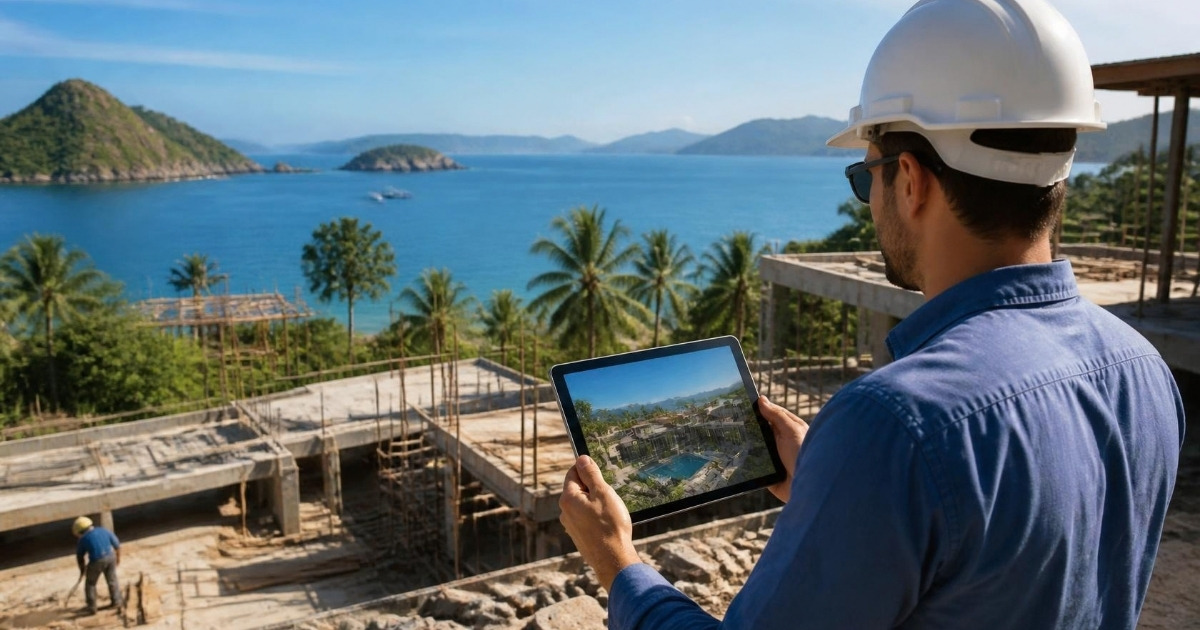
Bali's provincial government has stopped issuing new construction permits for hotels, restaurants and tourism accommodation on agricultural land in six of its districts, effective from 2026. That single administrative decision is doing something bigger than slowing down Bali's hotel pipeline — it is accelerating a shift that was already underway: hospitality investment moving to Lombok, Labuan Bajo, Raja Ampat and new gateway developments like Lampung's Bakauheni Harbour City. For developers, hotel brands and investors building in these newer destinations, one practical problem follows immediately: how do you sell, lease or fund a property that almost none of your buyers can easily go and see?
What Changed: Bali's 2026 Construction Moratorium
In September 2025, Bali Governor Wayan Koster reinstated a construction moratorium after floods killed at least 18 people on the island, citing uncontrolled development on agricultural and water-catchment land as a contributing factor. That directive has since been formalised into a ban on new hotel, restaurant and villa permits on productive agricultural land across six districts — Tabanan, Jembrana, Buleleng, Bangli, Karangasem and Klungkung — starting in 2026, as first reported by The Bali Sun. It is worth being precise about what this is and isn't: it is an executive directive enforced through instructions to district regents rather than a single codified national law, it applies to new permits on agricultural-zoned land rather than to every district, and Badung (Canggu, Seminyak, Uluwatu), Gianyar (Ubud) and Denpasar currently sit outside the formal ban. Existing, legally licensed hotels and villas keep operating. What it does mean is that new hotel supply in Bali's most in-demand districts is constrained for the foreseeable future — and capital that would have gone there is looking elsewhere.
Where Hotel Investment Is Going Instead
Indonesia's government has been actively steering tourism investment beyond Bali for several years through its "Super Priority Destinations" programme, which fast-tracks infrastructure funding and permitting for Labuan Bajo, Lake Toba, Borobudur and Mandalika/Lombok. The moratorium adds a second push on top of that pull. A few concrete markers of where the money is actually moving:
- Labuan Bajo — hotel room supply is projected to grow from roughly 1,533 rooms in 2025 to 1,825 by 2027, a 19% increase, with upscale and midscale supply growing fastest and international brands including Courtyard by Marriott, Mama Shelter and Crowne Plaza entering the market, per data reported by Komodo Luxury.
- Lombok — the island logged record international arrivals in 2025 on the back of new infrastructure and direct flight routes, according to Eastern Edge.
- Raja Ampat — dive-tourism and conservation-led luxury stays are drawing a small but fast-growing pipeline of high-end resort development.
- Bakauheni Harbour City, Lampung — state ferry operator ASDP is developing a roughly Rp4.7 trillion mixed-use tourism and port precinct at the Java–Sumatra crossing point, including hotel and commercial development planned through 2030, reported by Antara News.
The Practical Problem: Selling a Property Almost Nobody Can Easily Visit
Every one of these destinations shares a logistical reality that Bali's established hotel districts don't have: getting there takes more than a short domestic flight. Labuan Bajo and Raja Ampat both require a flight followed by a boat transfer. Bakauheni Harbour City is a greenfield precinct still under construction, so there is often nothing finished to walk through yet. That matters commercially, because the buyers, lenders and corporate partners a developer needs to reach — overseas hotel-brand licensing teams, institutional investors, pre-sale unit buyers, MICE planners scouting a venue for next year — are rarely willing to spend a day or two in transit just to do a first-pass evaluation. A site visit is still where deals get closed; it just can't be where they start.
How 360° Virtual Tours Close That Distance
A 360° virtual tour — the kind built on a Matterport-style capture — lets a remote buyer walk through a finished show unit, a hotel's public areas and guest rooms, or a construction site's current progress from a browser, on their own schedule, without anyone flying out to guide them. For a developer or hotel operator building outside Bali's established corridor, that does three specific jobs a photo gallery or a sales deck can't:
- It qualifies interest before anyone travels. Investors and corporate buyers can rule a property in or out for themselves, so the site visits that do happen are with people who are already close to a decision.
- It documents progress for financiers. Lenders and joint-venture partners funding a multi-year build in a location like Bakauheni or Labuan Bajo can review construction status remotely between formal site inspections.
- It works inside the channels buyers already use. A tour link drops straight into a WhatsApp message, an email, or an investor deck — no app download, no scheduling a call first.
What This Looks Like in Practice
For a pre-sale residential or resort-branded-residence project, a virtual tour of the show unit lets a buyer in Jakarta, Singapore or further afield assess the layout and finish before committing to the flight-plus-boat trip to see it in person. For a hotel nearing opening, a tour of the public areas and a representative guest room gives OTA partners, corporate travel buyers and press a way to preview the property ahead of launch. For an investor or lender, a periodic tour update against a fixed floor plan is a faster progress check than waiting for the next scheduled inspection. None of this replaces an in-person visit before money changes hands — it changes how many visits are needed, and who ends up taking them.
InReality Solutions is a Jakarta-based Google Street View Trusted agency and Matterport partner that has delivered 125+ 360° tour projects for property developers and hospitality operators across Indonesia. If you're marketing a project in a destination your buyers can't easily drop into, see how our 360° virtual tour service works, browse what a resort virtual tour actually involves, or get in touch to talk through a specific property.
Frequently Asked Questions
Why is Bali restricting new hotel construction from 2026?
Bali's governor reinstated a construction moratorium in September 2025 after floods linked to unchecked development on agricultural and water-catchment land killed at least 18 people. It has since been formalised into a ban on new hotel, restaurant and villa permits on agricultural land across six districts — Tabanan, Jembrana, Buleleng, Bangli, Karangasem and Klungkung — from 2026. Badung, Gianyar and Denpasar currently sit outside the formal ban, and existing licensed properties are unaffected.
Which Indonesian destinations are attracting hotel investment instead of Bali?
Labuan Bajo, Lombok and Raja Ampat are the clearest beneficiaries, backed by the government's Super Priority Destinations programme, along with newer gateway developments such as ASDP's Bakauheni Harbour City precinct in Lampung. Labuan Bajo's hotel room supply alone is projected to grow around 19% between 2025 and 2027, with international brands entering the market.
How do 360° virtual tours help sell hotel rooms or resort units before construction finishes?
A 360° tour of a completed show unit, model room or public area lets remote buyers evaluate layout, finish and flow before travelling to see the actual property in person. For projects still under construction, periodic tours give investors and lenders a way to check progress against the floor plan between scheduled site inspections.
What is the difference between a 360° virtual tour and a Matterport digital twin?
A 360° virtual tour is a set of linked panoramic photos a viewer navigates through; a Matterport digital twin adds an accurate 3D model with real measurements, a dollhouse floor-plan view, and the ability to measure distances directly inside the space — useful when investors or architects need more than a walkthrough.
Can a virtual tour replace an in-person site visit for investors?
No — it changes when and how many in-person visits are needed, not whether one happens before money changes hands. A virtual tour lets buyers and investors rule a property in or out remotely, so the in-person visits that do happen tend to be with people who are already close to a decision.

Content Specialist, InReality Solutions
Ready to Build Your New Reality?
Tell us about your brand and goals — we'll show you what's possible.